


Key Takeaways
- CE marking (LVD / EMC / RED / RoHS) remains the baseline safety requirement, but does not satisfy national European smart-charging and metering rules
- European buyers now run compliance due diligence before negotiating unit price
- Each market tests a different set of hardware, firmware and documentation requirements
- A shared hardware platform can be adapted, but firmware, test documentation and commissioning packs must be localised
- Distributors should request market-specific compliance artefacts instead of generic "European compliance" declarations
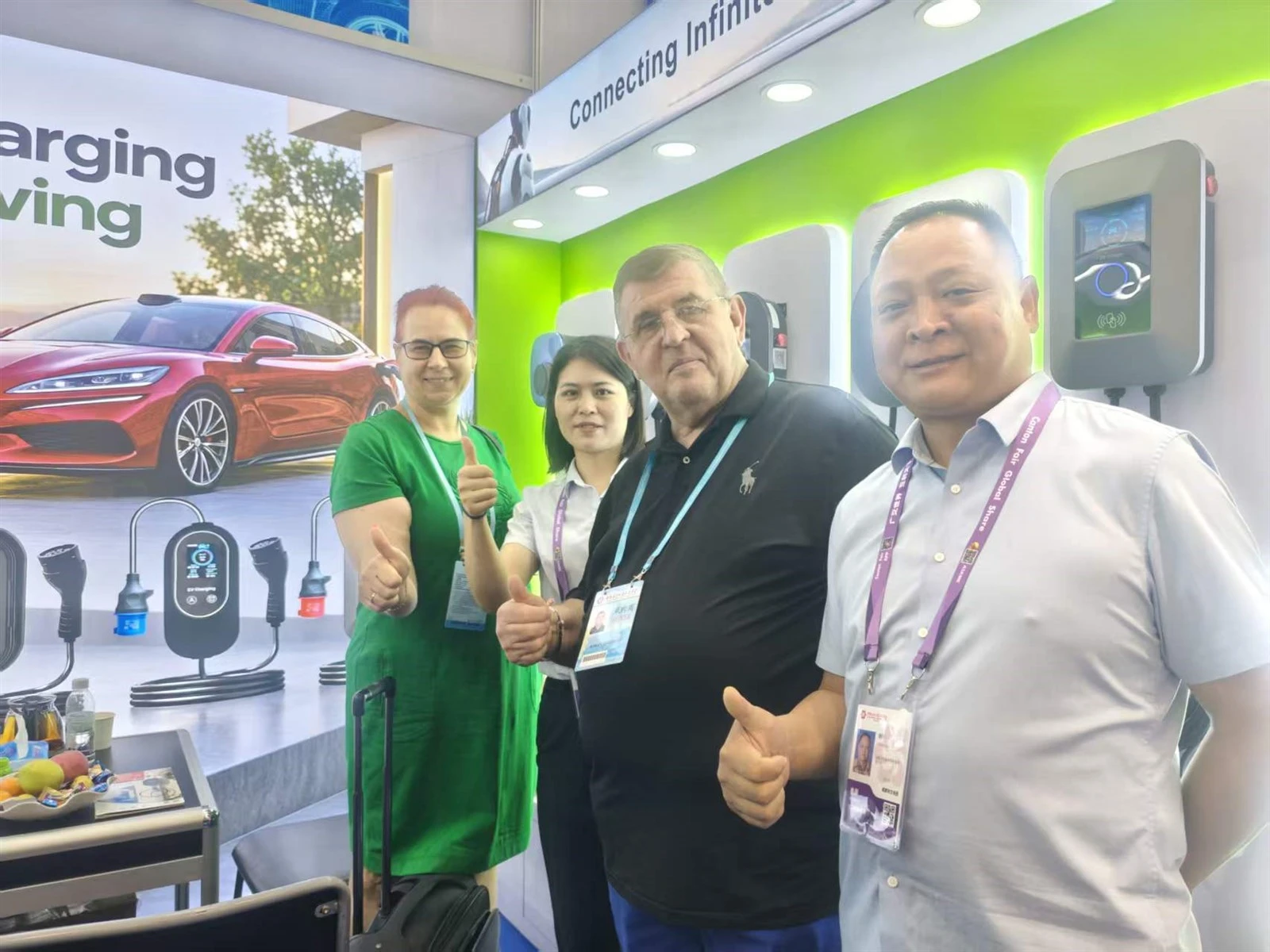
GUANGZHOU, China – October 2026 - As European buyers increasingly face mandatory national EV charging regulations, conversations at the 140th Canton Fair show a clear procurement shift: importers, installers and fleet operators are asking detailed compliance questions first, before negotiating unit pricing. On the show floor at elifeevcharger's booth, buyers from Germany, the UK and France raised market-specific regulatory requirements as their opening questions, rather than requesting lower pricing. This on-site observation forms the basis for a forthcoming three-part guide series covering Germany, the UK and France EV charger compliance rules.
Three separate buyers approached the booth within the same afternoon, each with a distinct market compliance priority. The German buyer asked how the charger supports Eichrecht-compliant metering for company car reimbursement workflows, and whether the board includes a dry‑contact input for §14a grid demand response control. The UK buyer enquired which models qualify for the OZEV approved product register and whether the firmware enforces mandatory default off‑peak charging per EVSCP / PAS 1878 rules. The French buyer spent the opening ten minutes discussing technical documentation: whether full French installer packs are available, and whether commissioning records satisfy Qualifelec IRVE audit requirements for ADVENIR subsidy applications.
None of the three buyers opened discussions on price.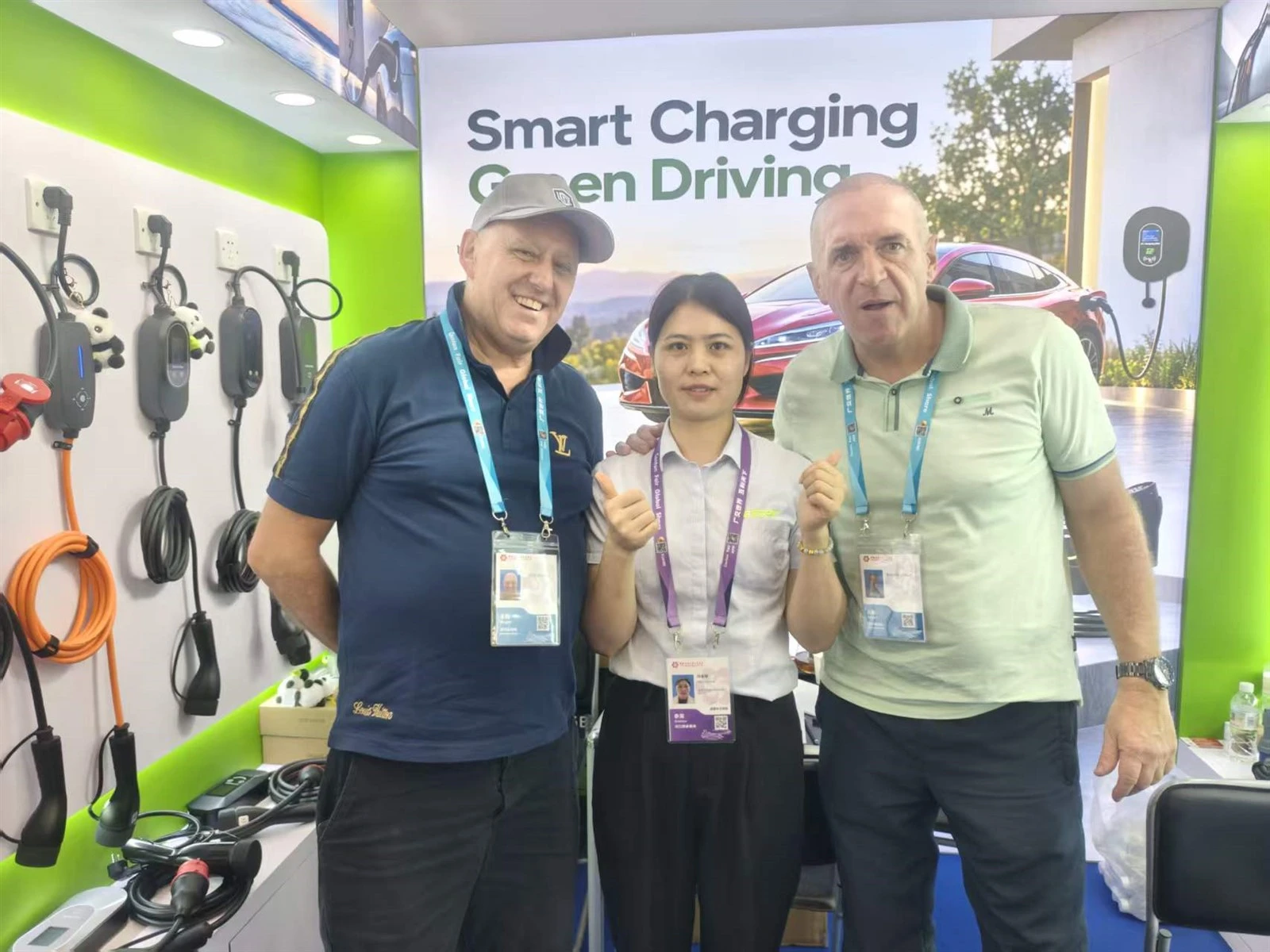
A Pattern, Not a Coincidence
This behaviour repeated across dozens of conversations over the show run. Mature European buyers are no longer shopping purely on landed cost. Their core due diligence checks verify whether the charger package can clear their country's statutory gate - including audit-ready documentation, firmware behaviour, metering hardware and installer-facing paperwork - before price enters the conversation.
The priority questions map directly to each country's unique regulatory architecture:
Germany buyers focus on Eichrecht metering law and §14a grid interface hardware
UK buyers focus on mandatory smart-charging firmware behaviour and OZEV grant eligibility
French buyers focus on IRVE installer audit trails and ADVENIR subsidy dossier documentation
The shared industry shift is clear: compliance validation has moved upstream in the procurement workflow. "CE marked" is no longer a sufficient differentiator. Buyers now demand proof the charger is configured for the specific national compliance pathway of their target market.
Quote (optional, for media pick-up): "We have watched this shift accelerate over 2026. A charger with CE can still be blocked at commissioning or excluded from subsidy schemes if it misses country-specific firmware, metering or documentation requirements. For European volume segments, compliance readiness is the first filter." - [Name], Sales & Compliance Lead, elifeevcharger
What This Means for EV Charger Supply Chains
For manufacturers, OEM/ODM suppliers and distributors, a generic "Europe-compliant" SKU is no longer competitive in high-volume, higher-margin residential multi-unit and fleet segments.
- German multi-occupancy sites require Eichrecht PTB-ready metering and §14a dry-contact integration
- UK rental and apartment segments require PAS 1878-aligned firmware, default off‑peak behaviour and OZEV registration capability
- French collective residential deployments require installer-friendly French documentation and IRVE-compatible commissioning sheets
These are not optional marketing features. They are hard procurement filters. If a charger fails one national compliance requirement, it is ruled out for that segment before pricing is evaluated.
Over the coming weeks, elifeevcharger will publish three standalone deep-dive guides breaking down each national compliance gate: Germany LIS-MPH / Eichrecht, UK PAS1878 / OZEV, and France IRVE / ADVENIR. The conversations captured at Canton Fair preview the growing importance of these non-negotiable market-access rules.
Read the series as it publishes:
- Germany: LIS-MPH grant and Eichrecht compliance
- United Kingdom: EVSCP, PAS 1878 and OZEV eligibility
- France: Qualifelec IRVE installer rules and ADVENIR subsidy workflows
FAQ
Q: Does this mean CE certification is no longer relevant for Europe?
A: CE (LVD, EMC, RED and RoHS) remains the mandatory baseline for product safety and electromagnetic compatibility. The critical change is that national market-access rules - Eichrecht in Germany, EVSCP / PAS 1878 in the UK, and IRVE installer audit requirements in France - sit on top of CE and control eligibility for subsidy schemes and multi-unit deployments.
Q: Are these national requirements applicable to portable chargers as well as wall-mounted units?
A: Scope depends on the regulation, not form factor. Eichrecht applies where billing and energy reimbursement take place. UK EVSCP smart charging rules apply only to defined private fixed chargepoints above the scope threshold. IRVE rules apply to installations above 3.7 kW. Portable chargers often fall outside these mandatory frameworks, depending on local installation rules.
Q: Will the upcoming industry knowledge articles cover all three countries?
A: Yes. The three-part series publishes separate dedicated guides for Germany, the United Kingdom and France. Each article details the regulation, required product configuration, and the checklist distributors should send to suppliers.
Q: Can a single product platform serve all three markets?
A: A common hardware platform can often be adapted, but firmware behaviour, compliance documentation bundles, metering configuration and installer paperwork must be customised per market. Treating the three markets as identical is one of the most frequent causes of costly compliance failure.
Q: What should distributors ask suppliers first?
A: Ask for market-specific compliance evidence rather than broad "European compliance" statements. For Germany: PTB metering documentation and §14a dry-contact capability. For the UK: PAS 1878 alignment and OZEV registration readiness. For France: complete French IRVE installer and ADVENIR commissioning documentation packs.