Products Description
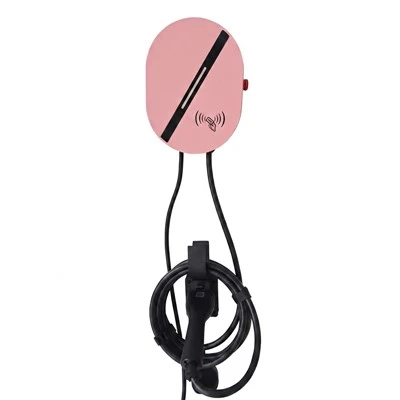
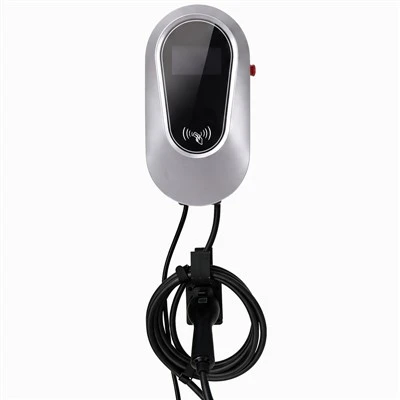
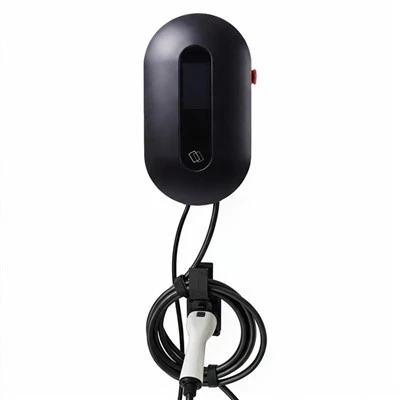
The EMS3-70-C is a 7kW EV Home Charging Point that was designed with a clear focus on installation speed and long-term serviceability. It runs on a standard 220V single-phase supply, connects through a blue industrial plug, and comes with a 4.3-inch display, NFC card access, and Type 2 or GB/T connectors. The unit is built for wall mounting with IP55 protection and is supplied with the mounting bracket and hardware.


Parameter
| Specification | |
| Model | EMS3-70-C |
| Electric Properties | |
| Input/Output Voltage | AC 220V |
| Input/Output Current | 32A |
| Rated Power | 7kW |
| Working Frequency | 50/60Hz |
| Phase | Single Phase |
| Structure Design | |
| Input Cable | Blue Industrial Plug 3x6mm² |
| Output Cable | 3x6+1x0.5mm² |
| Housing color | Optional |
| Jacket Material | TPE/TPU |
| Control System | |
| Authentication Methods | Plug andcharge, RFID card, Bluetooth, WiFi |
| Security Protection | |
| Certification | CE, RoHS |
| Output Connector | Type 2, GB/T |
| Input Plug | Type 2, GB/T |
| Waterproof Grade | IP55 |
| Working Temperature | ﹣20℃-﹢50℃ |

Core selling points

- The blue industrial plug was chosen because it saves a call-back. Many home chargers need a hard-wired 32A circuit, which means the electrician has to return once the cable is run. This 7kW EV Home Charging Point plugs into a standard blue 32A single-phase socket. If the socket is already there, the electrician can mount the unit, plug it in, and commission it in the same visit. If the socket is not there, the electrician installs one first, but the charger itself does not need to be opened or wired into the consumer unit.
- The 4.3-inch display helps during commissioning, not just for the homeowner. When the electrician first powers up the unit, the display shows the input voltage and the selected current. If something is wrong with the supply, the fault code appears immediately. The electrician does not need to connect a laptop or open an app to check whether the charger is working correctly.
- NFC cards can be registered on site in under a minute. The installer can program the customer's cards through the on-screen menu before leaving. The customer does not need to download an app, create an account, or wait for a cloud connection. For rental properties, the landlord can keep a spare card and deactivate a tenant's card when they move out.
- Cable length is confirmed at the order stage, not during installation. The charger is available with a 3m, 5m, or 10m cable. A 3m cable is often enough when the car parks nose-in to the wall. A 10m cable is useful for a double driveway or a garage where the car is parked sideways. The TPE/TPU jacket stays flexible down to -20°C, so the cable does not become stiff in winter.
- Overheat protection reduces service calls. The control box and connector are monitored during charging. If the temperature rises above the safe threshold, the charger reduces output or stops the session until it cools down. This helps prevent damage in insulated garages or during long summer charging, and it reduces the chance of a return visit for a thermal fault.
- The housing colour is a standard option, not a special order. Dark grey, white, and black are available as standard. Custom colours are possible for larger orders. The installer can match the charger to the garage wall or exterior render without waiting for a custom enclosure.


certifications and Use case

Compliance and certifications
The EMS3-70-C carries CE and RoHS certifications and complies with GB2345-1, GB2345-2, and GB/T 18487-1. The enclosure is IP55 rated, the connector is IP54, and the interface is IP55. The unit is tested for overcurrent, overvoltage, undervoltage, and temperature protection before shipment. Certification documents and test reports are available for distributors and installers.
Use case
An installer in the UK who specialises in residential EV charger installations used this 7kW EV Home Charging Point on a project for a landlord with three rental properties. The first property already had a blue industrial socket in the garage, so the installer mounted the charger, plugged it in, and programmed two NFC cards in about 40 minutes. The second property had no socket, so the installer fitted a blue 32A socket first, then returned the next day to mount the charger and commission it. The third property had a long driveway, so the landlord ordered the 10m cable version, which reached the car without an extension lead. The landlord keeps one master NFC card and issues a second card to each tenant. When a tenant moves out, the landlord removes their card from the charger's menu and registers a new one. The installer has not had to return to any of the three properties for a fault since the initial installation.

Package way

FAQ
Q: How long does commissioning usually take on site?
A: If the blue socket is already installed, mounting the charger and programming two NFC cards typically takes around 30 to 45 minutes. The installer needs to confirm the input voltage on the display, set the maximum current if required, and register the customer's cards.
Q: Can the installer pre-program the NFC cards before arriving on site?
A: The cards need to be registered to the specific charger, so they must be programmed on site or the charger must be powered up in the workshop first. If the charger is being delivered directly to the customer, the installer should allow a few minutes on site to register the cards.
Q: What happens if the property does not have a blue industrial socket?
A: The electrician can install a blue 32A single-phase socket first. The charger is then plugged into that socket. Alternatively, the charger can be ordered with a Type 2 input plug for hard-wired installations. The socket or wiring must be confirmed before the charger is ordered.
Q: Can one installer manage NFC cards for multiple rental properties?
A: Yes. Each charger has its own card list. The landlord or installer can add and remove cards for each property separately. A card registered to one charger will not work on another charger, which prevents tenants from using a card at the wrong property.
Q: What should the installer check before leaving the site?
A: The installer should confirm that the display shows the correct input voltage, the charger starts and stops a session, the NFC cards work, and the cable is securely connected. The customer should also be shown how to read the display and how to stop a charge manually.
Q: Does the charger need a firmware update after installation?
A: No. The charger works out of the box without a network connection. Firmware updates are optional and can be applied through the Bluetooth or WiFi connection if the customer wants remote monitoring features later. They are not required for normal charging.
Hot Tags: 7kw ev home charging point, China 7kw ev home charging point manufacturers, suppliers, factory, 7KW Wall Charger, charging your electric car at home, ev car chargers for home, for ev charger, portable charger for ev, Type 2 EV Home Charger